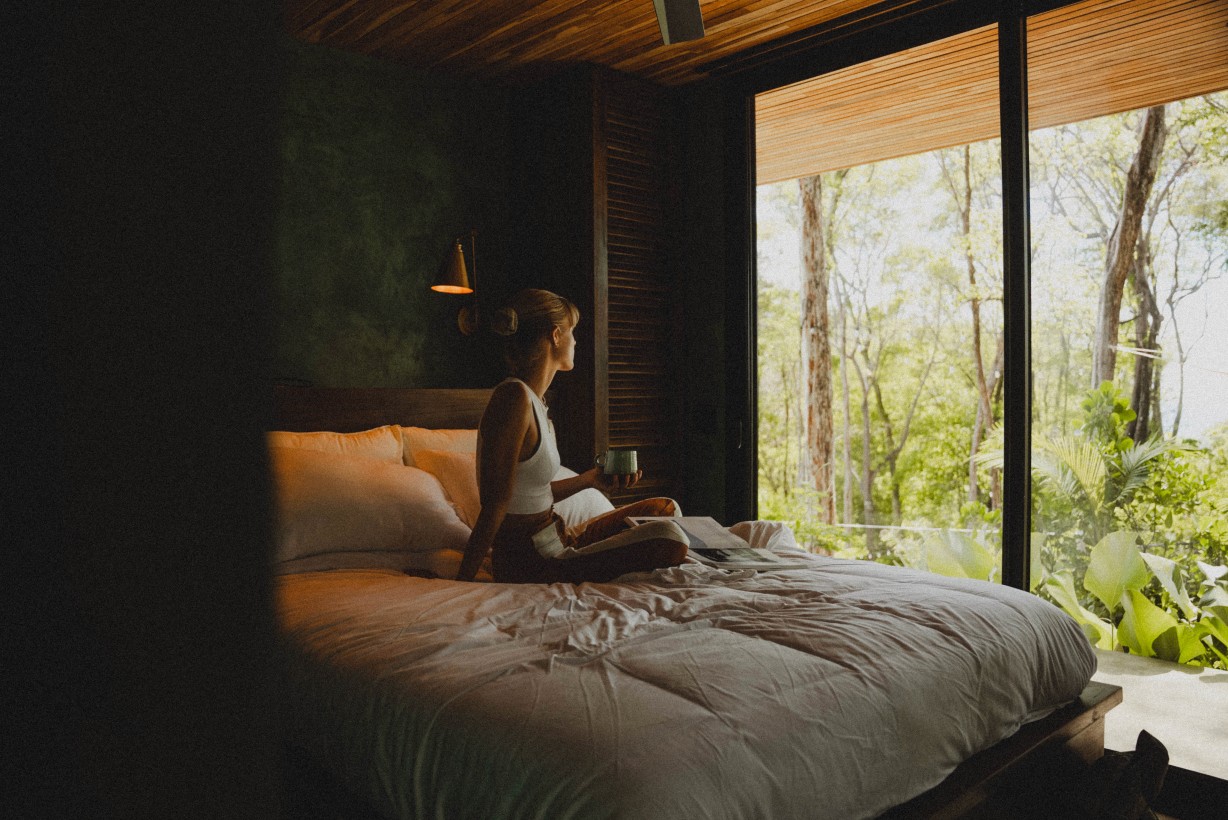
I recently worked with a founder who had spent close to two years optimising her sleep.
She had the tracker, the magnesium protocol, the blackout curtains, the consistent bedtime. She had read the books and followed the advice. And by every external measure, she was doing everything right.
She still wasn't sleeping well.
What she had never considered, and what almost no one in the optimization space is talking about, was the room itself.
Not the habits. The physical environment she was sleeping in every night.
Over the past 18 months, I've been working closely with founders, executives, and high performers through re:center, our nervous system regulation lodge in Santa Teresa, Costa Rica, on the Nicoya Peninsula. We measure autonomic nervous system function at intake and exit. We track what actually changes over time. Across more than 500 individuals, one of the clearest patterns we have seen is this:
Many people arrive exhausted in a way that sleep, as they have been experiencing it, is no longer fixing. They are not sleeping badly because of a mindset problem. They are sleeping badly because nothing in their environment has been built to support what the nervous system actually needs in order to fully let go.
What the nervous system actually needs at night
To understand why the environment matters so much, it helps to understand what sleep is actually doing.
Sleep is not passive. It is the primary window during which the autonomic nervous system shifts from sympathetic activation, the fight or flight state that most modern work keeps us in, toward parasympathetic recovery. This is when cortisol drops, melatonin rises, cellular repair begins, immune function does its maintenance work, and the brain consolidates memory and emotional experience.
This transition is not guaranteed. It requires conditions.
The nervous system is, at its core, an electrical and chemical system. It is exquisitely sensitive to the signals in its surrounding environment: light, temperature, sound, electromagnetic fields, air quality, scent, texture, and stimulus. All of these are inputs. All of them either support or interfere with the parasympathetic shift that deep sleep requires.
Most modern bedrooms are sending the wrong signals.
Wi-Fi routers, phones on charge, smart devices, and electrical wiring all emit electromagnetic fields. Research published in Environmental Health in 2022 found that individuals sleeping in EMF-reduced environments showed measurable improvements in cortisol balance, melatonin levels, serotonin, and oxytocin compared to a placebo control group. These are the hormones that govern stress response and sleep regulation. EMF exposure, the study found, acts as a chronic stressor stimulus on the nervous, endocrine, and immune systems.
Temperature matters too. Research published in ScienceDirect in 2024 found that even a 1°C rise in bedroom air temperature is associated with a measurable decline in sleep efficiency, and that CO₂ levels, affected directly by air quality and ventilation, compound this effect through the autonomic nervous system.
Most people have never slept in a room designed around any of this.
One question we built a room around
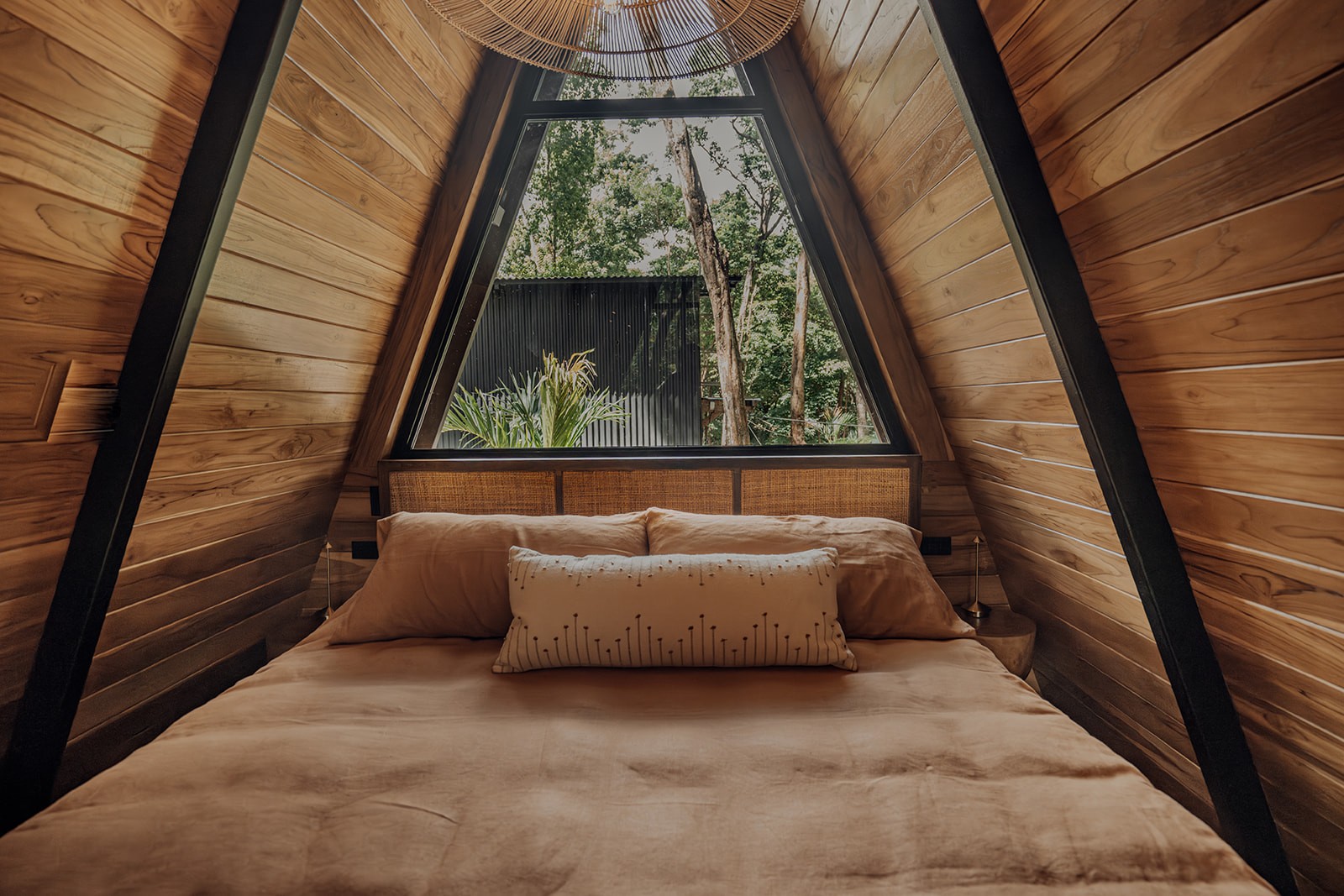
When we designed the rooms at re:center, we started with a single question: what does a nervous system need to fully let go?
Not what looks like a wellness room. Not what photographs well. What does biology actually require?
The result is a room built from the ground up for deep rest.
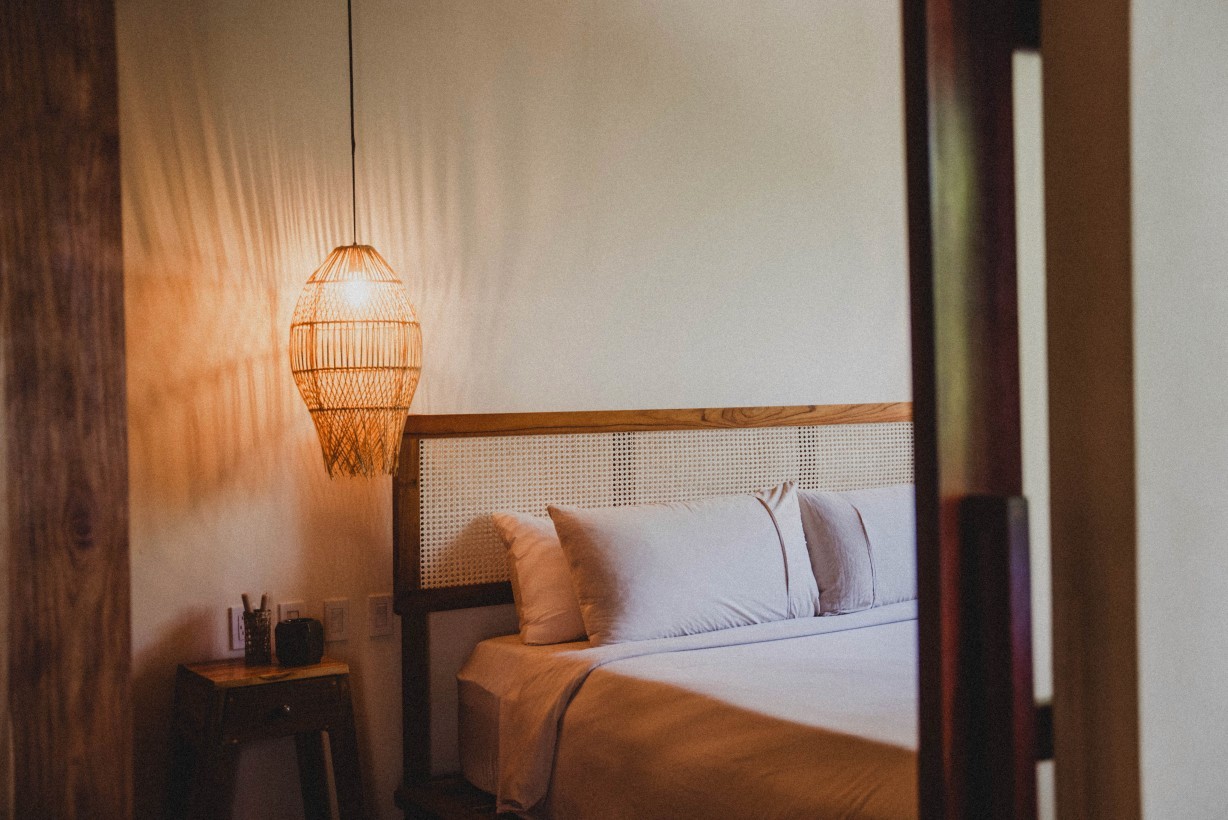
Low EMF design removes one of the most underappreciated disruptors of sleep: the constant low-frequency electromagnetic stimulation that keeps the nervous system in a state of low-grade alert. Air filtration manages the CO₂ and particulate levels that quietly compound sleep disruption night after night. Natural materials, wood, bamboo linens that genuinely breathe, organic textures, create an environment that feels coherent to the body rather than artificial.
Every room includes a PEMF mat. Pulsed electromagnetic field therapy at low frequencies has been shown in peer-reviewed research to support the body's natural shift toward the parasympathetic state and to measurably improve sleep quality. A 2025 double-blind, placebo-controlled trial published in Electromagnetic Biology and Medicine, involving 485 volunteers, found that PEMF stimulation of the vagus nerve at 16 Hz produced significant improvements in sleep quality and general wellbeing, with effects persisting seven days after the intervention ended.
Red light therapy is also in every room. Unlike blue-white light, red wavelengths do not suppress melatonin. Used as part of a wind-down routine, it allows the circadian system to begin its natural descent into rest without the cortisol-spiking effect that overhead lighting or screens produce.
The mattresses are imported, with cooling foam toppers that regulate temperature through the night. The pillow selection is broad enough that each guest can find what their body actually needs. A grounding mat connects the body to the earth's natural electromagnetic frequency. Curated scent uses the well-documented relationship between the olfactory system and the nervous system to signal safety and calm. There is a sleep mask on each pillow.
And there is a curated book selection, not a streaming platform, not a social feed, for the evenings where someone wants to wind down on their own terms. No algorithm deciding what comes next. No notifications. Just a quiet room that makes it easy to put the phone down.
In the morning, there is no alarm. Just the birds.
What we see when the environment changes
When people arrive at re:center, most of them have not experienced real sleep in some time.
They arrive carrying the accumulated fatigue of a nervous system that has been asking for something and not getting it. The metrics often show it clearly: low HRV, elevated resting heart rate, shallow sleep architecture, cortisol patterns that stay elevated into the night rather than dropping as they should.
Then something changes.
Not because of a new habit or a new supplement. Because the environment finally stopped fighting the body.
The most common thing guests describe, usually by the third night, is a quality of sleep they struggle to remember having before. Not just longer. Different. Quieter. More complete. They wake without an alarm and find themselves actually rested, which for many of them is a disorienting experience, because they had stopped expecting it.
This is not a placebo. It is what happens when you give the nervous system the conditions it was asking for.
Across our first year of measuring HRV at intake and exit, we saw an average 73 percent improvement in nervous system health scores across 14-day stays. Sleep is consistently one of the first things guests report changing, and the fastest.
The thing the sleep industry doesn't say
The sleep industry is worth over 70 billion dollars globally. It sells trackers, supplements, apps, mattresses, and courses. Most of it is oriented around individual behaviour: what you do before bed, how consistent your schedule is, what you consume.
Almost none of it asks the more fundamental question: is the room itself supporting what the nervous system needs?
Because the room is harder to sell. It requires removing things, screens, devices, electromagnetic interference, more than adding them. It requires slowing down the design process rather than accelerating it with new products.
But for the founders and executives who arrive at re:center having tried everything, this is almost always where the missing piece is.
Not a new protocol. A different environment.
Sleep is not broken in most of the people I work with. It is simply waiting for the right conditions.
The kind of sleep where you wake up and something feels different. Quieter. Clearer. The kind most high performers have forgotten was possible. We haven't forgotten.
If you want to experience this
re:center offers 7, 14, and 30-day residencies from our nervous system regulation lodge in Santa Teresa, Costa Rica, on the Nicoya Peninsula, one of the world's five Blue Zones.
Our re:wire Protocol is a 14-day programme focused on meaningful autonomic nervous system recovery, with HRV measured at intake and exit and a guided integration period to support what is built during the stay.
This is not optimisation. It is restoration. And it starts with a room built to let you actually rest.